Reality television singing competitions have a complicated reputation. Purists often argue that true artistry is forged in smoky bars and on endless highway tours, not on brightly lit soundstages in Hollywood. Yet, for over a decade, NBC’s hit show The Voice has quietly acted as one of the most powerful star-making machines in modern country music.
With the recent blockbuster announcement that Riley Green is officially stepping into the big red chair as a coach for the upcoming milestone Season 30, the show’s deeply rooted relationship with country music is once again taking center stage. Alongside heavyweights Kelly Clarkson, Adam Levine, and Queen Latifah, Green’s addition proves that the genre remains the undeniable lifeblood of the series.
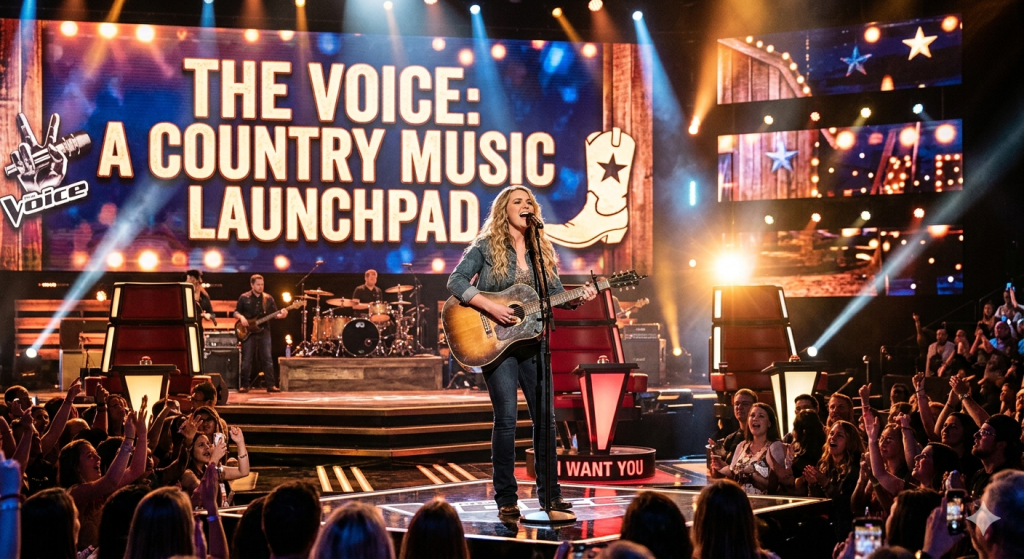
The Coaches: From Royalty to the New Guard
You cannot talk about the history of country music on The Voice without starting with Blake Shelton. For 23 seasons, Shelton wasn’t just a coach; he was the face of the franchise. His sharp humor and genuine passion for the genre helped him recruit top-tier country talent, leading to nine historic victories and proving to Nashville that prime-time television viewers had a massive appetite for country music.
When Shelton finally hung up his cowboy boots, the show didn’t miss a beat, immediately bringing in country royalty with Reba McEntire. Reba added an aura of prestige and decades of industry wisdom to the panel, famously steering Team Reba to victory.
Now, the torch is being passed to Riley Green for Season 30. The “I Wish Grandpas Never Died” singer brings a fresh, modern perspective to the panel. Representing the current wave of gritty, traditional-leaning country that dominates streaming charts, Green is already bringing a playful competitive energy to the show. Ahead of the premiere, fellow coach Kelly Clarkson publicly welcomed him by professing her fandom for his music, before quickly warning him that she fully intends to “whoop that ass” in the competition. It’s exactly this kind of cross-genre banter that country fans love to watch.
The Contestants: Success Beyond the Trophy
While winning The Voice is the ultimate goal on television, the real-world country music industry has proven that the exposure from the show is often worth more than the actual trophy.
Consider the show’s most successful alum: Morgan Wallen. Back in Season 6, Wallen was a relative unknown who competed on both Team Usher and Team Adam before being eliminated in the playoff rounds. Despite not even making it to the finals, the prime-time exposure ignited his career. Today, Wallen is a stadium-packing, record-breaking megastar, serving as the ultimate proof that an early exit on The Voice can still lead to the top of the charts.
On the flip side, the show has produced winners who successfully parlayed their victories into sustained country careers. Danielle Bradbery took home the crown in Season 4 at just 16 years old under Blake Shelton’s wing. She managed the difficult transition from teenage reality star to a respected, streaming-heavy country artist with hits like “The Heart of Dixie” and “Sway.”
Similarly, Cassadee Pope used her Season 3 victory to pivot from pop-punk to country, eventually earning a number-one country hit and a Grammy nomination for her duet with Chris Young, “Think of You.” More recently, traditionalists like Bryce Leatherwood have used their time on the show to keep classic, baritone country music alive in the mainstream media.
The Ultimate Editorial Takeaway
As The Voice gears up for Season 30, its impact on the Nashville machine is undeniable. The series has democratized how country stars are found, shifting the power from behind-the-scenes record executives to the fans voting at home.
Whether an artist walks away with the grand prize or gets knocked out in the battle rounds, the platform offers a masterclass in artist development. With Riley Green poised to champion the next generation of hopefuls this fall, the pipeline from the big red chairs to the Country Radio charts shows no signs of slowing down.

Leave a Reply